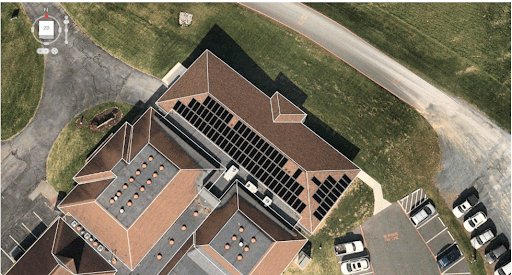
On April 20, 2022, Harrisonburg Mennonite Church (HMC) switched on a roof-mounted, 87-panel, 37 KW solar photovoltaic generator. This system provides roughly one-third of the church’s annual electricity demand. In the first 17 months of trouble-free operation, the system generated about 80 MWh of electricity, saving the church nearly $9,000 in electric bills. This system’s zero-emission electricity production reduced the church’s carbon footprint by some 60 tonnes of CO2, roughly equivalent to planting about 1,000 trees.
Years ago, the first attempt to install a solar power system at HMC did not go well. Disagreements arose, opposition became vocal, and the project was scrapped. A second attempt was made a few years later. Before beginning the new project, those involved in the first attempt were interviewed—both for and against the project. It became clear that communication problems contributed to the lack of success on the first attempt.
Based on these findings, a Solar project team was formed, and a constituency model for the project development was established. Four stakeholder groups were identified: Pastors/Elders, Creation Care, Buildings and Grounds, and the Church Council. As the project proposal proceeded, all four stakeholder groups were kept in the conversation process. Each group’s support was gained before moving to the next step. The Pastors/Elders group was responsible for the project aligning with the church mission. The Creation Care group promoted the reduction of the church’s carbon emissions. The Building and Grounds wanted a trouble-free system, and the Church Council wanted an economically feasible one. Once complete alignment was achieved, the final project proposal was presented to the congregation for their support, along with a fund-raising presentation.
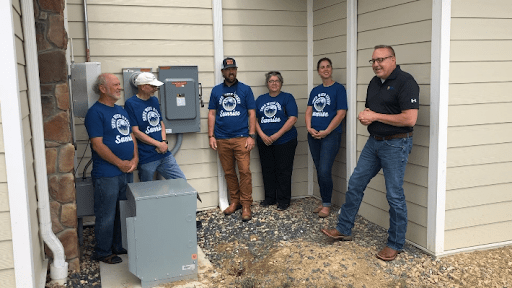
The project development process team followed a stepwise approach, gaining input and support from each stakeholder group. The strategic plan included a clearly defined vision, mission, and objectives. Many adjustments were made along the way. In the end, the final project was fully supported by all four stakeholder groups. This process took about one year from start to finish. Numerous vendors, equipment options, panel locations, economic evaluations, environmental impact analyses, and biblical principles of stewardship and justice were evaluated.
Congregation members were made “informally” aware of the progress during the project development process. There was a good bit of excitement and anticipation as the project proposal neared completion. The project proposal presented to the members included alignment with the church’s mission, the environmental benefits, the economic feasibility, and a vendor-technology option that provided performance guarantees, 10-year free service, and a 25-year warranty. The project was fully supported when brought to the congregation, and the fundraising was completed in 5 months. We came up with a “Buy-a-Panel” program. HMC members were given the opportunity to donate money to buy all or part of a solar panel. The goal was to raise the funds to purchase 87 panels.
It should be noted that the Inflation Reduction Act now allows nonprofits to claim a solar tax credit through direct payment. At the time of this project, nonprofits could not claim the tax credit. The church formed an LLC that purchased the panels, claimed the tax credit, collected the carbon credits, depreciated the asset, and collected a repayment revenue stream from the church. Once the solar asset is fully depreciated in year 6, the LLC will sell the system to the church at roughly one-half the original installed cost.
For more information, contact Steve Pardini, at pardini.steven@hotmail.com
 Shenandoah Valley Faith and Climate